
The largest surprise the film industry has experienced in 2025? The comeback of horror as a main player at the UK film market.
As a category, it has notably surpassed earlier periods with a annual growth of 22% for the UK and Irish box office: £83,766,086 in 2025, against £68,612,395 in 2024.
“Last year, no horror film reached £10m at the UK or Irish box office. This year, five films have,” notes a cinema revenue expert.
The major successes of the year – Weapons (£11.4m), another hit film (£16.2 million), the latest Conjuring installment (£14.98m) and the sequel to a classic (£15.54m) – have all remained in the multiplexes and in the audience's minds.
While much of the professional discussion highlights the unique excellence of renowned filmmakers, their triumphs point to something evolving between viewers and the style.
“Viewers often remark, ‘This is a must-see regardless of your genre preferences,’” says a head of acquisition.
“Such movies experiment with style and format to produce entirely fresh content, connecting with viewers on a new level.”
But beyond creative value, the steady demand of frightening features this year implies they are giving moviegoers something that’s highly necessary: catharsis.
“These days, movies echo the prevalent emotions of rage, anxiety, and polarization,” says a horror podcast host.
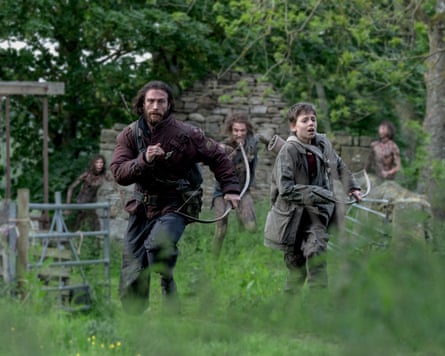
“Horror films are great at playing into people’s anxieties, while at the same time exaggerating them. So you forget about your day-to-day anxieties and focus on the monster on the screen,” explains a prominent scholar of horror film history.
Against a current events featuring geopolitical strife, enforcement actions, extremist rises, and ecological disasters, ghosts, monsters, and mythical entities strike a unique chord with filmg oers.
“It’s been noted that vampire cinema thrives during periods of economic hardship,” states an performer from a successful fright film.
“The concept reflects how economic systems can drain vitality from individuals.”
Historically, public discord has always impacted scary movies.
Scholars reference the surge of European artistic movements after the the Great War and the turbulent times of the post-war Germany, with movies such as early expressionist works and a pioneering fright film.
Subsequently came the 1930s depression and iconic horror characters.
“Consider the Dracula narrative: an outsider from the east brings a corrupting influence that permeates society and challenges its heroes,” notes a commentator.
“Thus, it mirrors widespread fears about migration.”
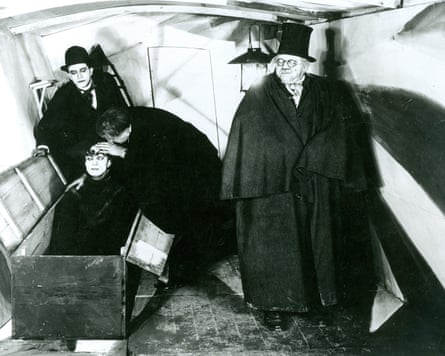
The phantom of immigration shaped the recently released supernatural tale a recent film title.
The creator clarifies: “I aimed to delve into populist rhetoric. Specifically, calls to restore a mythical past that favored a privileged few.”
“Additionally, the notion that acquaintances might unexpectedly voice extreme views, leaving others shocked.”
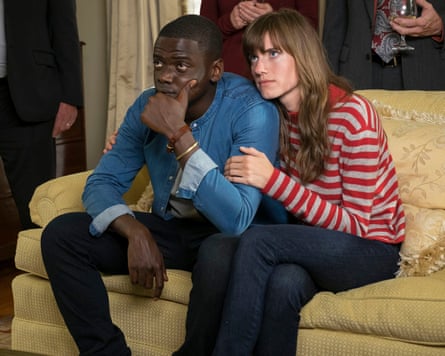
Arguably, the present time of praised, culturally aware scary films started with a clever critique launched a year after a contentious political era.
It ushered in a recent surge of innovative filmmakers, including various prominent figures.
“Those years were remarkably vibrant,” says a creator whose movie about a violent prenatal entity was one of the time's landmark films.
“In my view, it marked the start of a phase where filmmakers embraced wildly creative horror with artistic ambitions.”
The same filmmaker, who is writing a new horror original, adds: “In the last ten years, public taste has evolved to welcome bolder horror concepts.”
Simultaneously, there has been a revival of the overlooked scary films.
In recent months, a nicke l venue opened in a major city, showing underground films such as a quirky horror title, The Fall of the House of Usher and the 1989 remake of Dr Caligari.
The fresh acclaim of this “raw and chaotic” genre is, according to the theater owner, a direct reaction to the calculated releases produced at the theaters.
“This responds to the sterile output from major studios. Today's cinema is safer and more repetitive. Many popular movies feel identical,” he says.
“Conversely, [such movies] appear raw. As if they emerged straight from the artist's mind, untouched by studio control.”
Scary movies continue to disrupt conventions.
“These movies uniquely blend vintage vibes with contemporary relevance,” notes an authority.
In addition to the re-emergence of the mad scientist trope – with two adaptations of a classic novel on the horizon – he anticipates we will see horror films in the coming years reacting to our modern concerns: about AI’s dominance in the years ahead and “supernatural elements in political spheres”.
In the interim, a biblical fright story The Carpenter’s Son – which depicts the events of holy family challenges after the messiah's arrival, and stars well-known actors as the holy parents – is set for release soon, and will undoubtedly cause a stir through the religious conservatives in the America.</

