

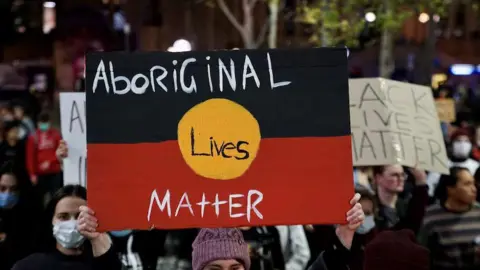
The tally of Indigenous people dying while in custody in Australia has hit its peak point since official data began in 1980.
New figures indicate that 33 of the 113 people who died in detention in the year ending in June were of Aboriginal or Torres Strait Islander descent. This represents an uptick from 24 fatalities in the prior equivalent period.
Indigenous Australian people are disproportionately overrepresented in the justice system. They constitute more than one-third of all prisoners, even though representing under 4% of the national people.
These sobering numbers emerge more than three decades after a pivotal royal commission into First Nations deaths in custody, which made hundreds of proposed changes.
Breakdown of the Recent Figures
Of the 33 Indigenous deaths in custody recorded between last July and this June, twenty-six took place while in prison custody, which is an increase from 18 in the prior year.
One death was in youth detention, and all except one of the deceased were men.
The other six fatalities took place in the custody of law enforcement, defined as when someone dies while police are holding or attempting to detain them.
The main reason of First Nations deaths was classified as "self-harm," with "illness." The report found that asphyxiation was the cause in eight of the deaths.
Geographic Distribution
The state of New South Wales had the highest number of Indigenous deaths in correctional facilities with nine, followed by Western Australia with six. Queensland, South Australia, and the Australian Capital Territory each had three deaths.
The growing number of First Nations deaths in custody in New South Wales is a "deeply distressing tragedy," the state's chief medical examiner recently stated.
In a recent statement, Coroner Teresa O'Sullivan stressed that this rising pattern was not "mere statistics" and that these deaths required "thorough and careful scrutiny, dignity and responsibility."
Demographic Details and Expert Reaction
The mean age of those who died was 45 years, and 11 of the deceased were still waiting for a sentence.
A university expert, Amanda Porter, described the figures as representing a "national emergency" that requires "leadership and political action."
Ms. Porter, who has attended several official inquiries with bereaved families, said very little has improved since the 1991's royal commission that was established to address this crisis.
"It's maddening to witness the quantity of inquests I attend, the many funerals families have to attend, and the reality that we are three decades after the inquiry, and the problem is getting progressively more severe," she commented.
Since the landmark inquiry, a total of 600 First Nations people have died in detention, which encompasses six in juvenile detention centers, as per the report.

